
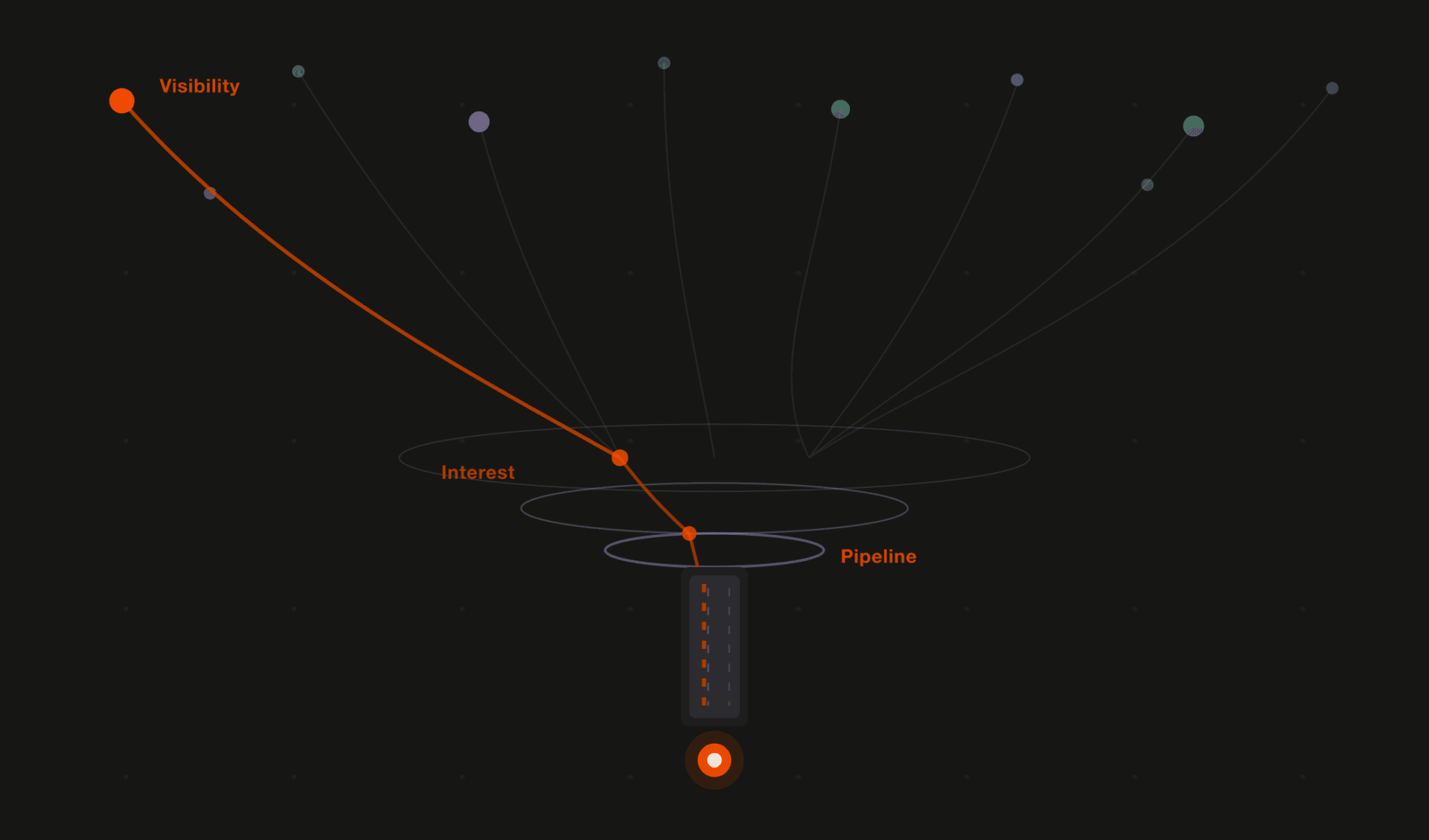
This article assumes the foundation is already in place: positioning is clarified, profiles are optimised, and a growth path has been chosen. Anyone with gaps here will find the right starting point in Part 1: LinkedIn for B2B: Content Isn’t the Problem.
Outreach in European B2B: What must happen before the first DM
A cold pitch DM destroys trust faster than content can build it. Forrester surveyed B2B buyers about their information sources: 82% trust colleagues and their own leadership; sales teams land at 29%.1 This describes a structural trust hierarchy that explains why a DM from someone you have never read is almost always ignored. Gartner confirmed in 2024 that 73% of B2B buyers actively avoid suppliers who send irrelevant outreach messages.2 The damage of a poorly timed pitch is not merely zero, it is actively negative.
Directness is valued in B2B, as long as it signals clarity rather than aggression. Outreach works best when context is established first. Before a DM is sent, the other person should already know who you are, they should have seen or read something from you at least once.
Response rates to cold outreach without prior context sit in the single digits. With two or three genuine comments beforehand, they rise to 30–50%. For comparison: well-executed cold email campaigns rarely achieve response rates above 5%. The difference lies in the platform and in what can happen before first contact on social media.

Robert Cialdini identified reciprocity as a mechanism back in the 1980s that translates directly to social media. Reciprocity states that whoever gives first, without demanding anything in return, generates a social impulse to reciprocate.3 On LinkedIn, this can be used systematically. The value step in every outreach campaign can leverage this to its advantage.
The outreach sequence in practice: Engage, value, ask
The logic is simple: first build context, then make contact, then request a conversation. What we deploy in practice follows exactly this sequence, and we run it fully automated, from the first interaction through to the calendar link.
Week 1: Engage
Comment on two to three of the target person’s posts. Your goal is to contribute something that would not have existed without you, share a personal experience or ask a question. Posts with a genuine question achieve 77% more comments than those without.4 The exercise has a side effect: you learn how your target audience communicates.
Week 2: Value
Only now does a DM follow without any pitch or calendar link. This is where many people fail, because they don’t know what to say when they’re not allowed to pitch. Instead, open with a connection point or thought that emerged during the previous week. Anyone who falls back on a template at this stage has wasted the valuable groundwork.
Weeks 3–4: Ask
If the person responds and shows interest, only now do you propose a conversation. Ideally, suggest a brief exchange from which both parties benefit. Sending a calendar link at this point without context is how you use the entire sequence to create a poor final impression.
Case Study · Bettermile
Bettermile has an innovative solution for last-mile logistics. But in a highly specialised niche, outreach without community building is barely scalable.
gnarles media conceived a niche event series: the ‘Last Mile Delivery Meetup‘. The event became a conversation opener because it created a context for open exchange. The recordings were subsequently repurposed as content.
The ABM approach: Less scatter, more Pipeline
For start-ups with clearly defined target accounts, account-based LinkedIn is the most precise approach. You build a list of 20 to 50 companies you genuinely want, and map the buying committees: who decides, who influences, who uses. Then you plan the touchpoints across three to four weeks. Once this plan is in place, almost everything else, content, engagement, DM, follow-up, can be fully automated. What cannot be automated is the quality of each individual step.
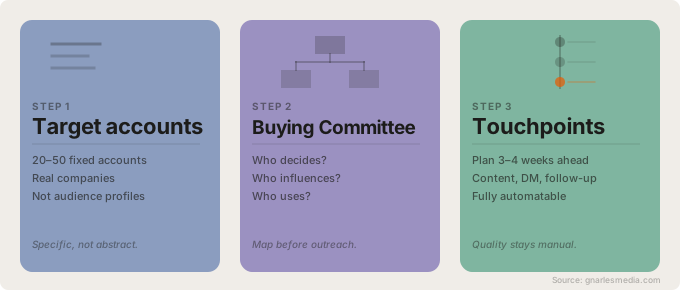
Once you know your target accounts, it will show in every message you send. This is precisely how a pipeline is built that does not fill by accident.
What counts in the pipeline, and what the dashboard doesn’t tell
LinkedIn analytics can easily drown you in vanity metrics. Impressions, likes, and profile views are numbers that calm the dashboard but enable no decisions. The Metricool 2026 study reveals something interesting: likes, comments, and shares are down year-on-year, whilst clicks are rising across all account sizes.5 People engage with LinkedIn differently than they used to.
“I’ve been watching you for a long time”, this is what you hear, if you remain visible for long enough, from someone who has never once commented. This is parasocial trust6, a mechanism media research has recognised since the 1950s. Whoever is consistently visible is already known to parts of their target audience before the first DM arrives. This is especially pronounced in European B2B, where decision-makers have less FOMO and lower risk appetite, but observe for longer.
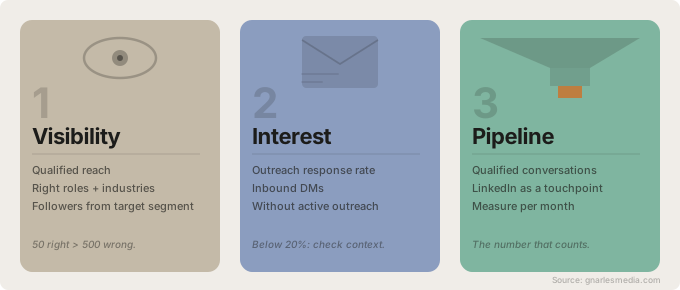
Visibility
Qualified reach. How many people from your target group see the posts? Roles, industries, decision-making level. Follower growth only counts from the right sector. Five hundred followers from the wrong segment are worth less than fifty from the right one.
Interest
Outreach response rate. Below 20% means context or timing is off. And inbound DMs: how many qualified enquiries arrive without active outreach? This is the long-term indicator that content and positioning are working.
Pipeline
How many qualified conversations per month where LinkedIn was a touchpoint? This is the number by which you measure success.
To begin with, a simple spreadsheet with weekly data is sufficient. What is not actively being optimised does not need to be tracked.
Four patterns that stall LinkedIn growth
After analysing as many LinkedIn accounts as we have, you start to see the same patterns. Here are the most common stumbling blocks from our practice.
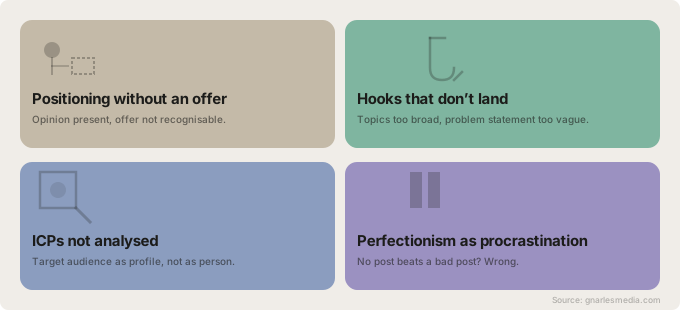
Positioning without an offer
Many active LinkedIn accounts have an opinion but no recognisable offer. They post about industry topics and share subjective perspectives. They even build reach — and yet, by the end, you have no idea why you would book a conversation with them. Positioning means every post should be written from the same standpoint, but not disconnected from the offer. Positioning and product marketing must be developed together.
A good company page positioning can be identified, for instance, when posts about company culture sit between product-related posts without feeling out of place, instead reinforcing trust, and when the hooks land.
Hooks that don’t land
If a network and reach already exist but the pipeline remains empty or fills with the wrong people, it is almost always a hook problem. Topics are often too broad and the problem statement too vague. Founders can sometimes think too big when writing, e.g. when getting lost in industry trends, future theses, or general observations. But a hook lands when it hits a specific problem belonging to a specific person. When the hooks land, the pipeline fills.
ICPs not analysed
Those who reduce their ICPs to profile attributes, industry, company size, or job title, without properly analysing them are sacrificing precision. Spending time with real profiles teaches you what triggers your target audience and which approaches they favour. This is valuable information for creating context, whether in posts, comments, or DMs.
This is why we work with real accounts as the foundation for ICPs. It forces concreteness before the first post is written.
Perfectionism as procrastination
The perfect post never comes, and polished branding is no substitute for consistent frequency. Founders often wait for the right moment or the right format, and end up not posting at all. But LinkedIn does not operate at the level of individual posts. This sounds obvious and is still the most common reason accounts never gain momentum.
What helps: Positioning first. Define the growth path. Then content and outreach. The order is non-negotiable.
Do it yourself or bring in support?
Both paths work, but they don’t suit everyone. Doing it in-house makes sense if you can invest three to five hours per week, enjoy writing, and are prepared to follow up LinkedIn leads in a structured way. In that case, everything covered in these two articles is achievable without external help.
External support always makes sense if your positioning is still unclear, or if you want to scale quickly. Equally, if your team needs some enablement, or if you want to build a system that functions sustainably over the long term.
gnarles media has been doing this for years. We develop the positioning, identify real accounts and ICPs, automate campaigns, and steer deliberately which accounts enter the pipeline. We write the first messages, build the structure, and train the team. The goal is a pipeline that fills regularly without everything depending on one person.
- Forrester 2025: B2B Buyers Rate Their Most Trusted Information Sources. Link: https://www.forrester.com/blogs/b2b-buyers-rate-their-most-trusted-information-sources/ ↩︎
- Gartner 2024: B2B Buyer Research 2024. Link: https://www.gartner.com/en/newsroom/press-releases/2025-06-25-gartner-sales-survey-finds-61-percent-of-b2b-buyers-prefer-a-rep-free-buying-experience ↩︎
- Cialdini, R. (1984). Influence: The Psychology of Persuasion. ↩︎
- LinkedIn internal engagement data (via Metricool 2026 study). ↩︎
- Metricool: LinkedIn Study 2026, n = 673,658 posts. Download: metricool.com/linkedin-trends-study/ ↩︎
- Donald Horton & Richard Wohl: Mass Communication and Para-Social Interaction. Observations on Intimacy at a Distance, in: Psychiatry, Bd. 19, Nr. 3, 1956, S. 215–229. ↩︎